
(https://doi.org/10.55612/s-5002-065)

Sema Alaçam
is an Associate Professor at Istanbul Technical University, Faculty of Architecture, where she was the Departmental Vice Chair of the Department of Architecture between 2021-2022 and the Coordinator of the Architectural Design Computing Graduate Program between 2018-2021. She received her B.Arch. (2005) degree from Istanbul Technical University (ITU), M.Sc. (2008), and Ph.D. (2014) degrees in Architectural Design Computing Graduate Program from ITU. She had research experience from TU Delft, Hyperbody Research Group (2006-2007), ETH Zurich, Chair of Structural Design (2013-2014), University of Oregon, Department of Philosophy (2017), and Université de Versailles Saint- Quentin-en-Yvelines (2017-2018).

S M Raihanul Alam
received his B.Sc. degree in Computer Science and Engineering from Bangladesh University of Engineering and Technology (BUET). His research interests include Human-Computer Interaction, Machine Learning, and Bioinformatics. His work has been published in venues such as CHI, IEEE EMBC, and ICECE, and he received an Honorable Mention at CHI’21. He previously worked as a Fullstack Software Engineer at Tekarsh, where he collaborated with MarginEdge on automation and machine learning solutions for restaurant management.

Leonardo Angelini
is currently Assistant Professor at the School of Management of Fribourg and at the School of Engineering and Architecture Fribourg, both part of the University of Applied Sciences and Arts Western Switzerland (HES-SO). He holds a PhD in computer Science obtained at the University of Fribourg in the field of Human-Computer Interaction. He is responsible for the Silver&Home living lab in Fribourg, which aims at obtaining a better match between the products and services developed by companies and the needs of seniors that are looking for a better quality of life.

Faraz Badali Naghadeh
received his Bachelor’s degree in Information Technology from Eastern Mediterranean University and his Master’s degree in Multimedia Informatics – Game Technologies from Middle East Technical University (METU). He is currently pursuing his Ph.D. in the Computer Science and Engineering program at Sabanci University, Türkiye. His research interests include human–computer interaction, augmented and virtual reality (AR/VR), AI-enhanced interaction design, and intelligent virtual agents.

Ananya Bhattacharjee
is a Postdoctoral Fellow at the King Center on Global Development. His research focuses on designing interactive, AI-driven interventions to enhance psychosocial well-being by dynamically adapting to users’ individual and social contexts. He employs large language models and reinforcement learning to create personalized digital experiences that foster peer support, reflection, and stress management. Bhattacharjee has developed AI-driven mental health interventions that reached over 10,000 people in the United States. He has collaborated with Microsoft to incorporate personality traits in Copilot and partnered with several nonprofit organizations in the Global North and South to promote policy changes in helpline operations. Bhattacharjee’s work bridges Human-Computer Interaction, AI, psychology, and social science, with publications in top venues such as CHI, CSCW, TOCHI, HCOMP, and JMIR, including one Best Paper and two Honorable Mentions at CHI. Bhattacharjee received his PhD in Computer Science from the University of Toronto.
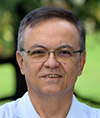
Kürşat Çağıltay
graduated from the Department of Mathematics at Middle East Technical University (METU) and earned his Master’s degree from the Department of Computer Engineering at METU. He holds dual Ph.D. degrees from Indiana University, USA, in Instructional Technology and Cognitive Science. Between 2002 and 2022, he was a faculty member in the Department of Computer Education and Instructional Technology at METU, and from 2022 to 2025, he was a faculty member in the Computer Science and Engineering program at Sabanci University, Faculty of Engineering and Natural Sciences. Currently, he is the Dean of School of Education, TED University, Ankara Turkey. His academic research areas include technology-enhanced learning, learning engineering, human-computer interaction, eye-tracking technology, and virtual/augmented reality.

Ramon Chaves
is a PhD student in Systems and Computer Engineering at PESC/COPPE/UFRJ and researcher at the Laboratory of the Future, where his work focuses on assessing the impact of artificial intelligence on public services. With a master’s degree in Computer Science (UFRJ) and a bachelor’s in Architecture and Urbanism (EAU/UFF, 2014)—including an exchange at the Technical University of Seville (2012)—he brings interdisciplinary expertise to his role as a business analyst at Lemobs, a govtech company developing smart city solutions since 2019. His experience spans digital participatory processes, e-government platforms, and sustainable urban projects, bridging technology, governance, and urban design.

Maria Lis Paula de Moraes dos Santos
is an architect urbanist with a Master’s degree from the Faculty of Architecture and Urbanism at the Federal University of Rio de Janeiro (UFRJ) and a degree in Architecture and Urbanism from the Instituto Federal Fluminense (2021). Her research and professional practice center on landscape planning, with expertise in landscape morphology, urban rivers, landscape ecology, and the dynamics of space-producing agents.

Jano de Souza
is a Full Professor at UFRJ, where he coordinates CAPGov and the Laboratory of the Future. He is affiliated with the World Futures Studies Federation (WFSF), The Millennium Project, and is a founding member of Brazilian Computer Society as well as a Senior Member of IEEE-SMCS and ACM SIGMOD. He has supervised 35 Ph.D. theses and 103 Master’s dissertations, and has published 79 journal articles, 48 book chapters, and over 450 conference papers.

Alan Dix
is Professor Emeritus at Cardiff Metropolitan University, Wales and at Swansea University, Wales where he was previously Director of the Computational Foundry. He is most well-known for his research in human–computer interaction including one of the key textbooks in the area as well as some of the earliest work on privacy, mobile interaction and, in 1992, warning of the danger of gender, ethnic and socio-economic bias in black-box machine learning systems. Recent books have included TouchIT on digital-physical design and several at the intersection between artificial intelligence and human issues. His interests and methods are eclectic including bad ideas in creativity, using genetic algorithms in submarine design, exploring the academic paper as an art form, computational modelling of regret, community heritage, and walking one thousand miles around Wales.

Claire Dormann
is a Senior Researcher at the Institute of Computer Graphics, Johannes Kepler University Linz, Austria. Her background is in human-computer interaction, and digital games. Her research is centered on games user research, the design serious games as well as tools for design. She has a long-standing interest in maps in video games, from maps-based analytics to ludic cartography.

Mario Heinz-Jakobs
is a research assistant in the ‘Human-Technology Interaction’ research group and Ph.D. student at the Institute for Industrial Information Technology at the OWL University of Applied Sciences and Arts. He has an interdisciplinary academic background, holding degrees in Cognitive Informatics (Bachelor) and Cognitive and Movement Sciences (Master). As part of his doctoral research, he investigates the design of adaptive assistive systems to support the vocational inclusion of people with cognitive disabilities.

Eva Hurtado Torán
PhD in Architecture (UPM) and full professor of architectural design (UE). She is currently a member of the Research Staff at the Universidad de Diseño, Innovación y Tecnología (UDIT), where she leads the VerSus research group, Universes on Both Sides, on the foundations and interactions between virtual and real design. She has published research on avant-garde and 20th-century architecture, pioneering architecture, residential density, and urban symbiosis. She works in Generative Artificial Intelligence, on cataloging and digitization of architectural heritage, and on visibility of pioneering female architects in Spain. Her office is involved in Modern Movement interventions and residential renovations.

Samira-Salomé Hüsler
is a social anthropologist and scientific collaborator at the Institute for Ageing Research (IAF) at OST – Eastern Switzerland University of Applied Sciences. She holds a Master’s degree in Social Anthropology and is currently pursuing her PhD at the University of Zurich, where she researches intergenerational care models in Japan and Switzerland. Her work focuses on social innovation—such as caring communities—and the integration of technology to support older adults in everyday life and care settings.

Hazem Ibrahim
is a PhD Candidate in Computer Science at New York University Abu Dhabi. His research examines the intersection of technology, society, and inequality, with projects spanning algorithmic audits of social media platforms, analyses of racial and gender representation in film and popular culture, and large-scale experiments uncovering bias in access to scientific knowledge. His publications appear in venues including PNAS Nexus, IEEE Transactions on Computational Social Systems, Scientific Reports, and IEEE Intelligent Systems. His work has also been featured in major media outlets, including Nature, Science, Scientific American, The Times, The Independent, New Scientist, and The Daily Mail.

Syed Ishtiaque Ahmed
is an Associate Professor of Computer Science at the University of Toronto and the founding director of the ‘Third Space” research group. His research interest is in the intersection between Human-Computer Interaction (HCI) and Artificial Intelligence (AI). Ahmed received his PhD and Masters from Cornell University in the USA, and his Bachelor’s and Master’s from BUET in Bangladesh. In the last fifteen years, he studied and developed successful computing technologies with various marginalized communities in Bangladesh, India, Canada, USA, Pakistan, Iraq, Turkey, and Ecuador. He has published over 100 peer-reviewed research articles and received multiple best paper awards in top computer science venues including CHI, CSCW, ICTD, and FaccT. Ahmed has received numerous honors and accolades, including the International Fulbright Science and Technology Fellowship, the Intel Science and Technology Fellowship, the Fulbright Centennial Fellowship, the Schwartz Reisman Fellowship, the Massey Fellowship, the Connaught Scholarship, Microsoft AI & Society Fellowship, Google Inclusion Research Award, and Facebook Faculty Research Award. His research has also received generous funding support from all three branches of Canadian tri-council research (NSERC, CIHR, SSHRC), USA’s NSF and NIH, and Bangladesh government’s ICT Ministry. Ahmed has been named the “Future Leader” by the Computing Research Association in 2024.
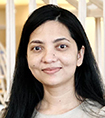
Nusrat Jahan Mim
is an Assistant Professor at the University of Toronto, with a joint appointment at the John H. Daniels Faculty of Architecture, Landscape, and Design and the Faculty of Information. She holds a Doctor of Design degree from the Harvard Graduate School of Design. Her research lies at the intersection of spatial politics, urban design, and critical computing, examining how design practices can either reinforce or challenge social exclusions while developing alternative solutions for marginalized communities.

Feyza Nur Koçer-Özgün
is a PhD candidate at Istanbul Technical University, Department of Architectural Design Computing. She received her bachelor’s degree in Architecture and master’s degree in Architectural Design Computing from ITU. She continues her academic research and professional works on HCI in architecture, UI/UX design, and AR applications.

Ricardo Lopes Correia
is an Adjunct Professor in the Department of Occupational Therapy at UFRJ’s School of Medicine and its Postgraduate Program in Community Psychosociology and Social Ecology (EICOS), where he leads the CNPq-registered Laboratory of Studies on Human Occupation and Participation Technologies (LEOH) and serves as Communications Secretary for the National Network of Occupational Therapy Education and Research (RENETO). A member of multiple professional organizations (ATOERJ, ABRATO, WFOT, and IBDU), he integrates teaching, research, and extension work focusing on Occupation Studies, Local Development, and Urban Planning, with particular attention to community practices and their intersections with sex, gender, and sexuality. He holds a Bachelor’s in Occupational Therapy (São Camilo University), Master’s/Doctorate in Health Sciences (ABC School of Medicine), and specializations in Cultural Accessibility (UFRJ), Social Projects & Public Policy (Senac), Urban Planning/Social Movements (IPPUR/UFRJ), and Human Sexuality (Celso Lisboa University)

Patrizia Marti
is Professor of Experience Design at the University of Siena. She is Rector’s delegate of Santa Chiara Fab Lab (www.scfablab.unisi.it) where she manages participatory innovation projects. She is a member of the Board of Directors of SID – Società Italiana di Design. From 2013 until 2019 she was appointed Professor at the Department of Industrial Design, Eindhoven University of Technology. She has an interdisciplinary background in design, philosophy and computing. Her research focuses on designing technological systems in sectors such as health, accessibility, cultural heritage, and food. She studies the impact of digital technologies on humans, society and the environment.

Ana Clara Meirelles de Miranda
is PhD a student in urban planning at PROURB/FAU/UFRJ and master in Urban and Regional Planning from IPPUR/UFRJ (2019). She has worked in architecture, urbanism, and scenography firms in Rio de Janeiro. Since 2018, she has been an architect-urbanist (civil servant) at the Federal University of Rio de Janeiro (UFRJ). His professional and research activities involve participatory design in urban projects as well as the application of geo-technologies for land use and occupancy management. She is one of the authors of the UFRJ university’s master plan.

Cora Pauli
is a social anthropologist and research associate at the Institute for Ageing Research (IAF) at OST – Eastern Switzerland University of Applied Sciences. Her work focuses on the intersection of ageing and technology, with particular expertise in technology for older adults and qualitative research methods. Through her work with Living Lab 65+, she applies a user-centered, participatory approach to the development and evaluation of technologies for older adults.

Annamaria Recupero
PhD in Psychology from Sapienza University of Rome, is currently a researcher at the University of Siena, where she teaches Communication Design. Since 2018, she has collaborated with the Santa Chiara Fab Lab of the University of Siena on research and development projects applying co-design and design thinking methodologies. She conducts design research with a specific focus on the psychosocial dynamics involved in the interaction with tools and services.

Carsten Röcker
is professor for Human-Technology Interaction at TH OWL University of Applied Sciences and Arts and member of the board of directors of the Institute Industrial IT. Prior to these appointments, he held positions at Fraunhofer IOSB-INA, RWTH Aachen University, University of California San Diego as well as Fraunhofer IPSI. During this time, he (co-)authored/edited 8 books and over 170 journal and conference papers in the fields of intelligent systems, human-computer interaction and technology acceptance. He has an interdisciplinary background with academic degrees in the fields of Computer Science (PhD), Psychology (PhD), Social Science (PhD), Management (Master), Electrical Engineering (Master), Communication Science (Habilitation).

Eduardo Roig Segovia
Architect (2003) and PhD in Architecture from the Universidad Politécnica de Madrid (UPM, 2014), with a dissertation titled The Augmented Environment, awarded summa cum laude and exhibited at the 16th Venice Biennale. He is a tenured lecturer in the Department of Architectural Graphic Ideation at the ETSAM School of Architecture, where he also serves as academic secretary of the Master’s Degree in Architectural Communication. He is a member of the Hypemedia Research Group and the DOCA Doctoral Program in Architectural Communication. He collaborates regularly with the EU Research Executive Agency on the Marie Skłodowska-Curie Actions, and is also co-founder of the architectural studio Combolab, whose work has received numerous national and international accolades.

Prianka Roy
is an Associate Product Manager at Publicis Sapient, where she drives the development of enterprise CRM and digital platforms for Fortune 500 clients in healthcare, energy, public sector, and media industries. She holds a Bachelor of Science in Computer Science and Cognitive Science from the University of Toronto (2022), where she worked as a research assistant in the Department of Computer Science and co-received the U of T COVID-19 Student Engagement Award for a project investigating misinformation spread by religious preachers on social media. During her time at U of T, she also served as an Orientation Executive and Leader for the Computer Science Student Union, co-chaired the U of T Scientista conference, and was an ambassador for the U of T Hatchery. Since joining Publicis Sapient in 2022, Prianka has advanced from trainee to junior and now associate product manager, leading Salesforce and AI-based product delivery, data governance, and compliance for globally distributed teams across North America, EMEA, and Asia.

Maria Dalila Rufino de Araújo
is a PhD candidate in the Postgraduate Program in Community Psychosociology and Social Ecology (EICOS/UFRJ). She holds a degree in Pedagogy from the State University of Ceará, Brazil (2016) and is currently pursuing a degree in Psychology at Veiga de Almeida University (UVA). Her research focuses on the Right to the City, person-environment interactions, mobility, and participatory processes. Additionally, she serves as an associate researcher at the Brazilian Institute for Sustainable Transportation (IBTS).

Dina Sabie
is a professor and program coordinator of the Game Programming program at Humber College, where she has taught since 2021. Trained as both an architect and computer scientist, she earned an H.B.Sc. in Architectural Studies and Computer Science (2011) and a Professional Master of Architecture (2015) from the University of Toronto, where her thesis on designing future refugee camps won top faculty recognition and a national nomination. She later completed her Ph.D. in Computer Science at the University of Toronto under the supervision of Professor Ishtiaque Ahmed, researching the emotional dimensions of migration and the ways migrants use digital devices to build resilience, representation, and democratic participation. Her interdisciplinary research has produced interactive augmented technologies—including sketch-based image recognition, VR gaming, and AR with object recognition—that foster communication and inclusion across communities. Alongside her academic career, Dina has contributed to multiple architectural and community projects, and her work has been recognized through numerous awards and fellowships, including an Honourable Mention at CHI 2020, the Irving Grossman Prize for best master’s thesis, and a range of provincial and university scholarships.

Jacira Saavedra Farias
is an architect and urban planner at the Federal University of Rio de Janeiro (UFRJ), where she works as a public servant implementing the institution’s master plan and developing urban projects for its campuses. A former assistant professor at UFRJ’s Faculty of Architecture and Urbanism, she earned her PhD in Urbanism from PROURB/FAU/UFRJ in 2019 and her Master’s in Urbanism from the same institution in 2009, with her dissertation receiving the Maurício de Abreu Prize awarded by the Pereira Passos Institute (IPP-RJ). Co-founder of Dois Tempos Arquitetura e Urbanismo, an architecture and urbanism atelier, she has extensive experience collaborating on urban revitalization initiatives including Favela-Bairro, Novas Alternativas, Morar Legal, Porto do Rio, and PAC, impacting 17 areas across Rio de Janeiro. She also served as an architect at the State Environmental Institute (INEA/RJ) in the Environmental Recovery Department until 2020. Her research focuses on urban space planning and design, urban analysis and design techniques, informal settlements, right to the city, and participatory urban design.

Vera Tângari
is an architect and urban planner with a PhD in Urban Environmental Structures from the University of São Paulo and a Master’s in Urban Planning from the University of Michigan. As an Associate Professor at the Federal University of Rio de Janeiro’s School of Architecture and Urbanism, she serves on the permanent faculty of both the Graduate Program in Architecture and the Graduate Program in Project and Heritage. Her research affiliations include the Center for Sustainable Urban Development at Columbia University’s Earth Institute, where she focuses on Open Space Systems and Geoprocessing Analysis. She coordinates the SEL-RJ Research Group and serves as vice-leader of the CNPq-registered Places and Landscapes Group. She has received competitive research funding from both FAPERJ (State of Rio de Janeiro) and CNPq (National Research Council).

Giulia Teverini
is a PhD candidate in “Design for Made in Italy: Identity, Innovation & Sustainability” at the University of Campania “Luigi Vanvitelli.” She conducts her research at the Santa Chiara Fab Lab of the University of Siena, where she focuses on design-driven innovation in healthcare and wellbeing. She currently collaborates with the Care and Wellbeing research group at Elisava – Barcelona School of Design and Engineering. Her research interests include the design of technologies that enable valuable individual and collective care experiences.

Enrique Villamuelas García
Architect graduated from the Polytechnic University of Madrid (UPM) and the University of Alicante (UA). He is a researcher and member of the research groups Hypermedia (UPM) and Versus from the University of Innovation, Design and Technology (UDIT). He is currently pursuing his doctorate, researching the interpretability and explainability of deep learning algorithms to study the socio-spatial controversies they produce.

Günter Wallner
is Professor for Game Computing at the Johannes Kepler University Linz and holds positions at the Eindhoven University of Technology and Ontario Tech University. His research interests lie at the intersection of games user research, data analytics, and information visualization. His work particularly centers on understanding player behavior in games and on researching methods to explore and communicate the collected data to derive actionable insights for game design and development. He is editor of the ‘Data Analytics Applications in Gaming and Entertainment’ book.

Daniele Zaccaria
is a sociologist and currently a researcher at the Centre of Competence on Ageing at the University of Applied Sciences and Arts of Southern Switzerland (SUPSI). He holds a PhD in Economic Sociology from the University of Brescia, Italy. His research focuses on wellbeing in later life, with a particular emphasis on the use of participatory approaches in ageing research. He has coordinated and contributed to several applied research projects using co-design methods, including initiatives on dementia-friendly communities, the use of ICT for social inclusion, and intergenerational initiatives fostering age-friendly cities. He collaborates closely with local stakeholders and associations engaged with older adults.