
(https://doi.org/10.55612/s-5002-067)

Alaa Alkhafaji
is a Lecturer in Human Computer Interaction in the Department of Computer Science at the University of Mustansiriyah in Baghdad/Iraq. She completed her PhD in the School of Computing/ University of Portsmouth in Jun 2018. Her research interests are in the area of smart and ubiquitous systems to be used through mobile and wearable technologies as well as human-computer interaction design to incorporate users’ experience in designing new technologies to provide adaptive and user-friendly services.

Gabriel Badea
is a Lecturer at the Computers and Information Technology Department, University of Craiova, Romania, and a PhD in the area of peer assessment since 2023. His research interests include peer assessment, web technologies, e-learning, and technology-enhanced learning. He authored and co-authored over 20 publications, including journal articles and conference papers. He received several scholarships and awards, including one best paper distinction. He received the BSc degree in Computer Science and the MSc degree in Information Systems for e-Business from the University of Craiova, Romania, in 2016 and 2018 respectively.

Federica Caruso
received the M.S. degree in Computer Engineering and the Ph.D. degree
in Information and Communication Technologies from the University of LAquila, Italy, in 2018 and 2022, respectively. Since 2022, she has been a post-doctoral researcher with the Department of Information Engineering, Computer Science and Mathematics (DISIM), University of L’Aquila. Her research interests include human–computer interaction, assistive
technologies, technology-enhanced learning, serious games, gamification, and immersive virtual reality technologies.
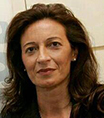
Licia Cianfriglia
School principal. Elected member for the managerial category at the Superior Council of Public Education. Responsible for Partnerships and Institutional Relations at ANP. Member of the Technical-Scientific Committee supporting DGEFID of the Ministry of Education in the process of improving the National Digital School Plan. Member of the Advisory Board of the EdTech Observatory organized by the Politecnico di Milano and MIP Graduate School of Business. Over the years, she has ben Vice President of ANP, FP-CIDA and CIDA. As a designer, coordinator, and trainer, she is involved in the vocational training of managers and teachers on educational policies, technological innovation for teaching, and school organization. She graduated in Mathematics with full honors from “La Sapienza” University of Rome and obtained the 2nd level Master’s degree in MAESTRIA – Education Management: Training Structures, Innovation, Learning, and the specialization in School and Career Counseling at the same University. She got also the Specializations in School Management: Legal, organizational and training skills, and in Methods and Techniques of online training at the University of Florence; and the Master’s degree in E-learning: e-learning object design at the University of Tuscia.

Mihai Dascalu
is a full professor at UPB, responsible for the courses of Object-Oriented Programming, Semantic Web Applications, and Data Mining and Data Warehousing. He was head of the class in 2009 (e.g., GPA 10/10; ranked 1st across specialization and university) at University Politehnica of Bucharest and holds a double Ph.D. with the highest distinctions in Computer Science and Educational Sciences, with his thesis published as a book in Springer, Studies in Computational Intelligence. He has extensive experience in national and international research projects with more than 300 published papers, including 30 articles at top-tier conferences, 100+ papers indexed ISI at renowned international conferences, and 10+ Q1 journal papers.

Óscar de Oliveira
holds a degree in Computer Science – Applied Mathematics from Universidade Portucalense (2001), a master’s degree in Computer Engineering from the Polytechnic Institute of Porto (2012), and a PhD in Industrial Engineering and Management from the University of Porto (2019), focused on heuristics for two-dimensional cutting and packing problems.
His professional path began as a systems analyst, developing digital platforms for industrial programming and international B2B and B2C applications in the fashion sector. He entered education in 2006 and transitioned to higher education in 2013 at the School of Management and Technology of the Polytechnic Institute of Porto, where he has held several leadership roles, including course director and sub-director.
He is a researcher at CIICESI, with interests in combinatorial optimisation, data science, machine learning and digital literacy. His work has resulted in publications across multiple domains and collaborations with interdisciplinary teams.
Currently, he coordinates the Polytechnic of Porto’s participation in the Erasmus+ project Boosting Entrepreneurial Mindset of Students with Challenge-Based Learning (CBL) and is involved in research projects on data quality in industrial contexts. In 2021, he joined the Capacid@de Digital initiative, assuming coordination responsibilities in 2022.

Ines Di Loreto
is Associate Professor at the University of Technology of Troyes (UTT), France. She holds a Master’s degree in Philosophy and a PhD in Computer Science from the Università degli Studi di Milano, as well as an HDR from the University of Toulouse III – Paul Sabatier. Her research in Human-Computer Interaction focuses on the role of the body and the senses in learning through technologically augmented artefacts. Lately, she has been exploring how AI reshapes learning dynamics. She adopts an action-research approach, with applications in disability, cultural heritage, design, and crisis management.

Tania Di Mascio
is an Associate Professor in the Department of Information Engineering, Computer Science, and Mathematics (DISIM) at the University of L’Aquila. She teaches courses on Methods and Methodologies for ICT and Advanced Database Systems. At the University of L’Aquila, she is responsible of the Interaction and Computational Systems Laboratory and oversees the L’Aquila node of CINI Assisting Technology. In addition to her academic roles, she serves as an Innovation Manager for MIMIT and is a co-founder and CXO of Project Innovation srl. Prof. Di Mascio has participated in numerous EU projects, assuming significant scientific management roles. Currently, she coordinates the Assistive Technology and Embedded System research group (ATES@AQ). Her primary research interests include human-computer interaction, assistive technologies and embedded systems, and technology-enhanced learning. She has authored or co-authored over 150 research articles in peer-reviewed journals and conference proceedings. Prof. Di Mascio is a member of several steering committees for international and national conferences. She acts as a referee for numerous international journals and frequently serves on organizing and program committees for conferences and workshops. Additionally, she is an active member of SIGCHI, the Center of Excellence of DEWS, and the HiPEAC (High Performance, Edge, and Cloud Computing) European Organization.

Duarte Dionísio
Holds a Bachelor’s degree in Information Systems and Technologies from Universidade Atlântica and a Master’s degree in Business Information Systems from Universidade Aberta, in partnership with Instituto Superior Técnico. His academic and professional background is focused on the intersection of information technology, decision support systems, and data protection. He has developed advanced skills in system architecture, collaborative platform development, information security, and technological compliance. Professionally, he coordinates digital platforms with a particular emphasis on strategic information management and personal data protection within organizational contexts.

Marisa Ferreira
holds a bachelor’s degree in Agrarian Management (Portugal, 2000), a Master of Science in Economic and Management Sciences (Greece, 2002), and a PhD in Business Sciences (Portugal, 2012). Her academic background encompasses management, economics, and nonprofit studies. She has participated in numerous international academic initiatives, serving as an invited lecturer in countries such as Slovenia, Germany, Lithuania, Kosovo, Algeria, Italy, and Greece. She has also collaborated as an invited researcher at the Centre for Co-operative Studies at University College Cork (UCC), Ireland.
Her professional path began in marketing and sales management in a small company, before committing to academia, where she worked for over two decades as a lecturer in marketing, general management, and nonprofit strategy and marketing.
Her research has resulted in over thirty published papers, focusing primarily on nonprofit management and marketing, corporate social responsibility, and social innovation.
In recent years, she has taken on several leadership roles. She is currently Vice Dean of the School of Management and Technology at the Polytechnic Institute of Porto (ESTG-IPP), where she is responsible for strategic planning, international relations, research, and CSR. Since 2021, she has also served as Deputy Director of CIICESI, overseeing international project development and science dissemination.

Fabio Franchi
He is currently an Assistant Professor (RTDa) at the Department of Information Engineering, Computer Science and Mathematics of the University of L’Aquila, Italy. He received his master’s degree in Computer Engineering and his Ph.D. in Information and Communications Technology from the University of L’Aquila, in 2012 and 2018, respectively. He conducts research on cloud and edge architectures that support next-generation services driven by ultra-reliable, low-latency communications, enhanced mobile broadband, and massive machine-like communications. Since 2022, he has been teaching the course “Cloud Architecture and Services” delivered as part of the master’s degree in Telecommunications Engineering at the University of L’Aquila. He is an AWS Academy Accredited Educator and listed in the Engineer professional register “Ordine degli Ingegneri della Provincia dell’Aquila”.

Daniele Frigioni
is full professor of information engineering at the Department of Information Engineering, Computer Science and Mathematics of the University of L’Aquila, where he teaches Operating Systems, and Algorithms and Data Structures. He received his Ph.D. in 1997 by the University of Roma “La Sapienza”. From 1997 to 1998, he held a post-doc position at the Max-Planck-Institut für Informatik (Saarbrücken, Germany). His main research area is Algorithm Engineering and in particular the design, analysis and engineering of graph and network algorithms. He is (co-)author of many publications in both international journals and conferences. He served as member or chair in various Program Committees of leading international conferences. He has been involved in several EU and national funded projects.
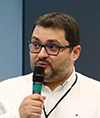
Vladimir Ghita
is a Romanian cybersecurity expert and the Chief Global Strategist at FORT S.A., a leading cybersecurity company based in Bucharest. He has lead FORT since 2021 until 2025, leading the company in complex strategic projects, like the merger between Global Resolution and Isec Associates or listing the company on the Bucharest Stock Exachange. With over 15 years of experience in the IT industry and more than a decade in consultancy, Vlad also received a Ph.D in Industrial Engineering from the Politehnica University of Bucharest. He is highly interested in developments regarding Artificial Intelligence and believes that cybersecurity is a must in today’s digital world.
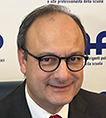
Antonello Giannelli
President of ANP. School Inspector. Formerly School Principal. Responsible of organization at ANP. Trainer and consultant at ANP. Coordinator of teacher training at Lazio’s School of specialization for teacher training. Specialist in operational research and decisional strategy (University of Rome “La Sapienza”). Master in school management (University of Florence). Graduated in physics (University of Bari).

Carlo Giovannella
Graduated in Physics, he worked long time in solid state physics as an expert of complex systems. Nowadays can be considered a Designer for the experience: expert in the technology-enhanced learning, interaction design, computer-mediated communication, design and management of processes, process and product innovation, ecosystems monitoring and benchmarking. From 2015 till 2023 has been the President of ASLERD (Association for Smart Learning Ecosystems and Regional Development); at present is member of the Executive Committee of the association as Past-President. It has been the Scientific Director of the Creative Industries Area at the Consorzio Roma Ricerche from 2013 till 2016. He has been assistant professor at the University of Rome Tor Vergata from 1983 till 2025 (now retired and adjunct professor), where he has chaired for more than 25 years the ISIM_garage (Interfaces and Multimodal Interactive Systems), a research lab devoted to design and development of TEL-environments, tools and methods for education, interaction design, and more. He is the Editor in Chief of the journal Interaction Design and Architecture (IxD&A) since 2005. It has been involved for shorter periods in the editorial board of JeLKS and IJDLDC and it is involved in the scientific board of ET&S Journal.

Vincent Guarnieri
is a Sports Scientist who graduated in training and optimization of sports performance at Université Côte d’Azur. In recent years he has been working on the development of an individualized training prescription tool in the form of a mobile application; “Selfit”, while maintaining his activity as a strength and conditioning coach.

Andrea Mangiatordi
is an Associate Professor at the University of Milan-Bicocca. His research interests include inclusive education and educational technology. His past experience includes the development of projects related to the accessibility of web environments and electronic publishing.

Sâmia Mouzinho-Machado
PhD candidate in the postgraduate program of Oral Radiology at the Piracicaba Dental School – State University of Campinas (FOP-UNICAMP), with part of the PhD developed at the Catholic University of Leuven – Belgium (KU Leuven) in 2023 as part of a Sandwich PhD. Dental surgeon from the State University of Paraíba (UEPB) and Master in Oral Radiology from FOP-UNICAMP.

Laurentiu-Marian Neagu
is a scientific researcher and lecturer at Politehnica University of Bucharest, holding a Ph.D. from Politehnica University of Bucharest and MINES ParisTech Research Centre in France. His main areas of research interest are Automated Systems, Intelligent Tutoring Systems, Natural Language Processing Techniques, and Gamification. Over the past three years, Laurentiu has been involved in several research projects aimed at digitizing areas of Romanian Literature and integrating automated systems in these fields.

Rita Oliveira
got her graduation in New Communication Technologies (2008) and her Master’s degree in Multimedia Communication (Interactive Multimedia field) (2010), both by the University of Aveiro, Portugal. She got her PhD in Information and Communication in Digital Platforms (2014) by the University of Aveiro and University of Porto. After finishing her PhD, she worked on various projects as researcher. From 2016 to 2018 she conducted her Post-Doctoral research. Currently she is a PhD Researcher at Department of Communication and Art (University of Aveiro) and teaches some subjects in undergraduate courses. As a member of the DigiMedia research centre her investigation interests are related to web accessibility and usability and the design and development of interactive television services adjusted to users with special needs, namely visually impaired persons.
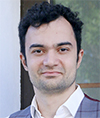
Razvan Paroiu
is a researcher and lecturer at National University of Science and Technology POLITEHNICA Bucharest, with a particular focus on Natural Language Processing and creative AI applications such as music generation. His work centers on building intelligent systems capable of understanding and interacting with human dialogue, while also exploring the integration of AI into both creative and practical domains. At the Faculty of Automation and Computers, he contributed to AI research projects such as Optimize and InsureAI. He currently teaches several courses, including Advanced Web Techniques, Algorithm Design, and Python for Business Intelligence, and supervises master theses. With over four years of experience in full-stack web development (Java Spring, ASP.NET, Vue.js), Big Data, and a CCENT networking certification, he remains committed to interdisciplinary learning, research, and publication in top-tier journals.

Sara Peretti
received a Ph.D. in Neuroscience from the Department of Biotechnological and Applied Clinical Sciences of the University of L’Aquila in 2019. Today, she is a research fellow at the University of L’Aquila (Center of Excellence DEWS) and focuses on key topics in developmental and educational psychology in connection with modern digital technologies. In 2017, she spent some months abroad at Middlesex University in London as a visiting researcher, focusing on the associations between musical skills and language development in preschoolers. In 2021, she spent six months at the University of Salamanca as a visiting researcher, focusing on the role of technologies in affecting the development and learning of various skills in children and adolescents. She is a member of the ATES@AQ research group. She serves on editorial boards and reviews for international journals and conferences. She is a member of the Italian Association of Psychology (AIP), Developmental and Educational Psychology Section, and Communication & Language Acquisition Studies in Typical & Atypical Populations (CLASTA).

Maria Chiara Pino
received the M.S. degree in psychology and the Ph.D. degree in psychology, psychiatry, and neuroscience from the University of L’Aquila, in 2012 and 2017, respectively. Since 2019, she has been an Assistant Professor with the Department of Biotechnological and Applied Clinical Sciences (DISCAB), University of L’Aquila. In 2015, 2021, and 2022, she spent some months in abroad at Middlesex University London, as a Visiting Researcher. There, her work was focused on the study of the development trajectory of social cognition abilities in individuals with typical and atypical development. She is the author and coauthor of 50 research articles in peer-reviewed national and international journals. Her main research interests include typical and atypical development, and more precisely, in the field of socio-cognitive development.
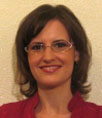
Elvira Popescu
is a Full Professor at the Computers and Information Technology Department, University of Craiova, Romania. Her research interests include technology-enhanced learning, adaptive educational systems, learner modeling, computer-supported collaborative learning, learning analytics, and intelligent and distributed computing. She authored and co-authored over 100 publications, including two books, journal articles, book chapters, and conference papers. In addition, she co-edited nine journal special issues, as well as 23 international conference proceedings. She participated in over 15 national and international research projects, three of which as a principal investigator. Prof. Popescu also serves as the Chair for the IEEE Women in Engineering Romania Section Affinity Group and is a board member for the IEEE Technical Committee on Learning Technology and the International Association of Smart Learning Environments. She is also a Distinguished Speaker in IEEE Computer Society Distinguished Visitors Program, and she gave several invited talks at international conferences. She received several scholarships and awards, including five best paper distinctions. She is actively involved in the research community by serving as editor-in-chief for one journal, associate editor for two journals, member of five other journal editorial boards, organizing a series of international workshops (SPeL 2008–2020), serving as a conference chair, program committee chair and track chair for over 20 conferences.

Joana Raminhos Silveira
Currently pursuing a PhD in Multimedia in Education at the University of Aveiro (UA), Joana holds a master’s degree in Audiovisual and Multimedia from Escola Superior de Comunicação Social. Her work experience ranges from Learning Experience Design (LXD) to children’s books illustration. In addition, she is Disability Awareness Speaker and a published author. Her first book, “A Joana Joaninha só tem uma pintinha” (2022) celebrates diversity and inclusion, encouraging young readers to embrace what is unique. Her research covers the participatory design of digital educational games aimed at preschoolers.
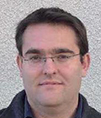
Eric Rigaud
has been a researcher at the Risks and Crises Research Center (CRC) of Mines Paris – PSL* (Sophia Antipolis) since September 2005. His research aimed at designing, developing, and experimenting with methods and tools prototypes intended to support individuals, businesses, and territories in their efforts to reduce their vulnerabilities and improve their ability to deal with unwanted situations.
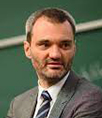
Razvan Rughinis
is a professor and manager experienced in designing and delivering engineering courses and applied research in Computer Networking, Security, Computer-Supported Collaborative Learning, Human-Computer Interaction, and Operating Systems at the Politehnica University of Bucharest. Proven skills in bringing together academic and industry partners in energetic projects and events. Oriented towards achieving meaningful and enduring results. Focus on excellence in teaching and student evaluation, fostering enthusiastic and competitive teams, and developing knowledge production and sharing in the IT&C community.

Arnaldo Santos
Professor at the Department of Sciences and Technologies of Portugal Open University.
Invited Professor at the Department of Communication and Art of the University of Aveiro.
He is a vice director of the doctorate program in web sciences and technology. He is a senior researcher at DIGIMEDIA (Digital Media Communication), and at INESC TEC (Human ISE Center). He completed his PhD studies at the University of Aveiro, where he obtained degrees in Communication Sciences and Technology. He has contributed as author or coauthor to four books and more than 100 papers published in international conferences and journals, as well as in several research projects. He is a specialist in Digital Transformation, Learning Organizations, and Learning Systems. His current research interests include Artificial Intelligence, Learning Organizations, and Knowledge Management. He has more than 30 years of experience in academia and as a consultant, having worked in management in the corporate sector.

Arkendu Sen
an anatomist/ophthalmologist by training, is a Professor at the Sir Jeffrey Cheah Sunway Medical School, a Fellow of the Monash Education Academy and a Senior Fellow of the UK’s Higher Education Academy. With his passion for Technology-Enhanced medical education, he holds a medical degree and a PhD in Technology-Enhanced Learning (TEL). He had researched and designed cutting-edge educational technology innovations in Practical skills learning for large cohorts, Peer teaching Methods, and Innovative Collaborative Learning, culminating in the design of the Medical Anatomy and Pathology E-Learning (MAPEL) Lab—an exemplar of a state-of-the-art learning environment and pedagogy showcased nationally and internationally. He holds a joint patent and an ITEX medal for Collaborative Learning Systems of Surface-Touch Computers. He is now researching new methods of 3D Visualisation of learning objects and developing and studying the impact of gamification and XR, including augmented and virtual reality education tools. Along with educational research grants, his innovations have been recognised through numerous awards, including the Best Paper, Australian Government OLT Citation, International RH Innovation in Medical Education Award (twice), Vice Chancellor’s Teaching and the Faculty Dean’s Award (twice).

Francesco Smarra
received the M.S. degree in Control and Systems Engineering and the Ph.D. degree in Electrical and Information Engineering from the University of L’Aquila, Italy, in 2010 and 2014, respectively. He accomplished the International Curriculum Option of Doctoral Studies in Networked, Embedded, and Hybrid Control Systems for Complex, Distributed and Heterogeneous Systems. He has held visiting scholar positions at UC Berkeley (2012–2013) and University of Pennsylvania (2014–2015) and visiting research position at University of Pennsylvania (2016–2017). He was recipient of the Best Application Paper Award of the European Control Conference in 2015. He obtained the National Scientific Qualification for the role of Associate Professor in Control Theory. His research interests include control theory, Artificial Intelligence, and modelling and control of complex systems via Machine Learning, with applications to building automation, structural monitoring, and industrial systems.

Hao Xuan Tan
a PhD student at Monash University in Malaysia. She has a background in Attention deficit hyperactivity disorder (ADHD) and medical education research and holds a Doctor of Medicine degree from Monash University in Malaysia. Her research focused on brain-based learning, learning science, pedagogies, curriculum mapping and thinking skills in medical education.

Sébastien Travadel
is Professor at MINES Paris in data science with applications to risk management. Previously he was co-founder and R&D manager of a startup specialized in big data analysis for the optimization of aircraft fleets.

Oksana Tymoshchuk
is an Auxiliary Researcher at the DigiMedia of the University of Aveiro. She earned her Doctorate in Multimedia in Education in 2017 and a Masters in Special Education in 2012 from the University of Aveiro. In 2021, she completed a post-doctoral program in Communication Sciences and Technologies. Her work focuses on Social Sciences, specifically Media, Digital, and Communications, as well as Educational Sciences, emphasizing General Education and Special Education.

Ana Isabel Veloso
Professor and Dean of the Department of Communication and Art, in the University of Aveiro. Throughout years, Ana Isabel Veloso has supervised many students of master’s and doctoral degree levels. She has also been the coordinator of several research projects, such as IC Senior X, SEDUCE 2.0, SEDUCE, EYES ON GAMES, IMP.cubed. She has published more than 200 peer-review publications (papers in journals, books and conferences) around the world. Co-founder of the Portuguese Society for Videogames Sciences. The research area is in the co-design of wellbeing digital media solutions for specific audiences (e.g. kids, seniors, disabled) in different contexts (e.g. health, education) and digital games.

Diego Joseph Villalon
has a Research Grant at the University of Milano Bicocca and teaches Social Design at NABA University, has experience in different areas of design and accessibility projects. His current research interests are Universal Design for Education and Signage for Wayfinding in educational contexts.

Lucius Vinicius-Filho
completed his Bachelor’s degree in Informatics Engineering on 2022 and his Master’s degree in Digital Game Development on 2024 at the University of Aveiro. Currently enrolled in the PhD Program in New Media at the University of Aveiro since 2024 and he is working on inclusive design for eye-gaze devices, mainly targeted to children with Cerebral Palsy or motor limitations.

Nelson Zagalo
Professor at the University of Aveiro, and Scientific Coordinator of DigiMedia – Digital Media and Interaction Research Center. Founded the Portuguese Society for Videogames Sciences, and the Journal of Digital Media & Interaction. He has served as technological and scientific consultant for companies, European and national funding programs, and superior education course accreditation. He has published more than one and a half hundred peer-review papers in journals, books and conferences around the world. He has written the books “Interactive Emotions, from Film to Videogames” (2009), “Videogames in Portugal: History, Technology and Art” (2013), and “Engagement Design. Designing for Interaction Motivations” (2020).